
Gaming guide
Controller Stick Drift: Causes and Solutions
Find out why a game controller's thumbstick drifts and what can be done about it.
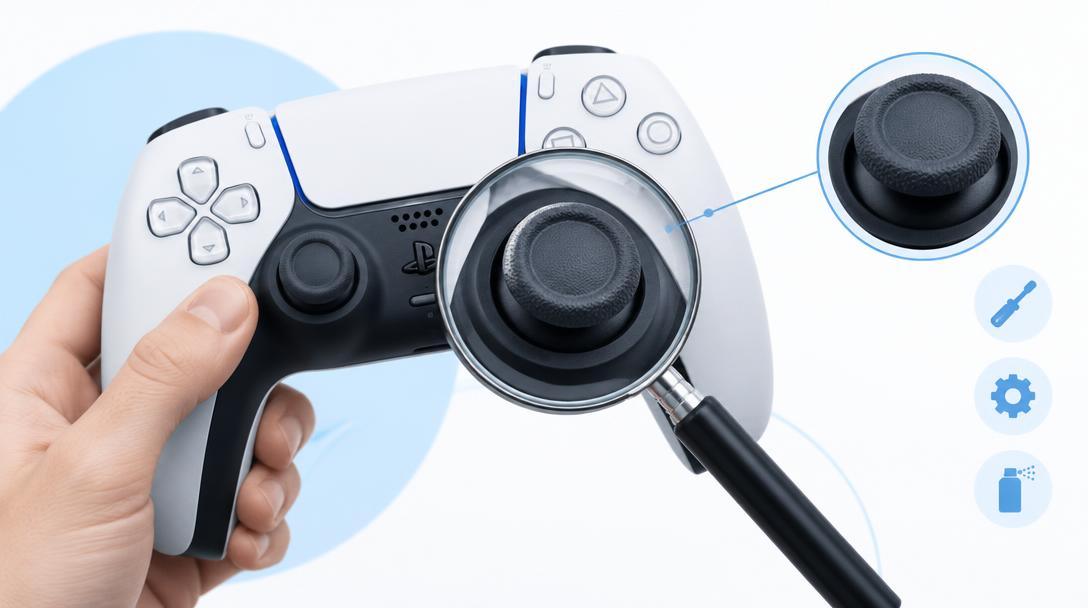
Stick drift happens when the analogue sensor reports movement that is not there, usually from wear, dirt or moisture reaching the module.
What the symptoms can mean
A character that moves without input, menus that scroll on their own or a re-centred stick that still reads off-centre are typical signs of drift.
What to do next
Clean around the stick base, update the controller firmware and test in another game. If drift persists, replacing the stick module is a straightforward workshop repair.
How drift repair is done
The controller is opened, the drifting stick module is tested and replaced with a new one, and the controller is retested on a calibration screen before it goes back to you. Where available, upgraded hall-effect modules can be fitted — they sense position magnetically, so they have no wear surface and do not develop drift. The repair also covers the button membranes and battery connection while it is open.
Extending controller life
Clean hands and a dust-free storage spot keep grit out of the stick bases, where it grinds the sensor rings. Avoid flicking the sticks as extra buttons — the click mechanism is a separate part that wears first — and let sweaty grips dry before the controller goes back in a drawer. These habits roughly double the life of the original modules.
When to arrange a diagnosis
If the problem continues after safe basic checks, a proper diagnosis is the best next step. It helps separate a replaceable part from a deeper board, power or software issue before any repair is approved.
Common questions
Can stick drift be fixed without replacing parts?
Sometimes — cleaning under the stick cap and a firmware update cure mild cases. When the sensor is worn, replacing the module is the only lasting fix.
Why did my new controller drift so quickly?
Heavy use, dust or a manufacturing weak point in the sensor can cause early drift. A module replacement — ideally with hall-effect parts if available — ends the problem properly.